

On Saturday, May 9, 2026, barely twenty-four hours before Ghana marked Mother’s Day, something unusual unfolded at the University of Media, Arts and Communication (UniMAC).
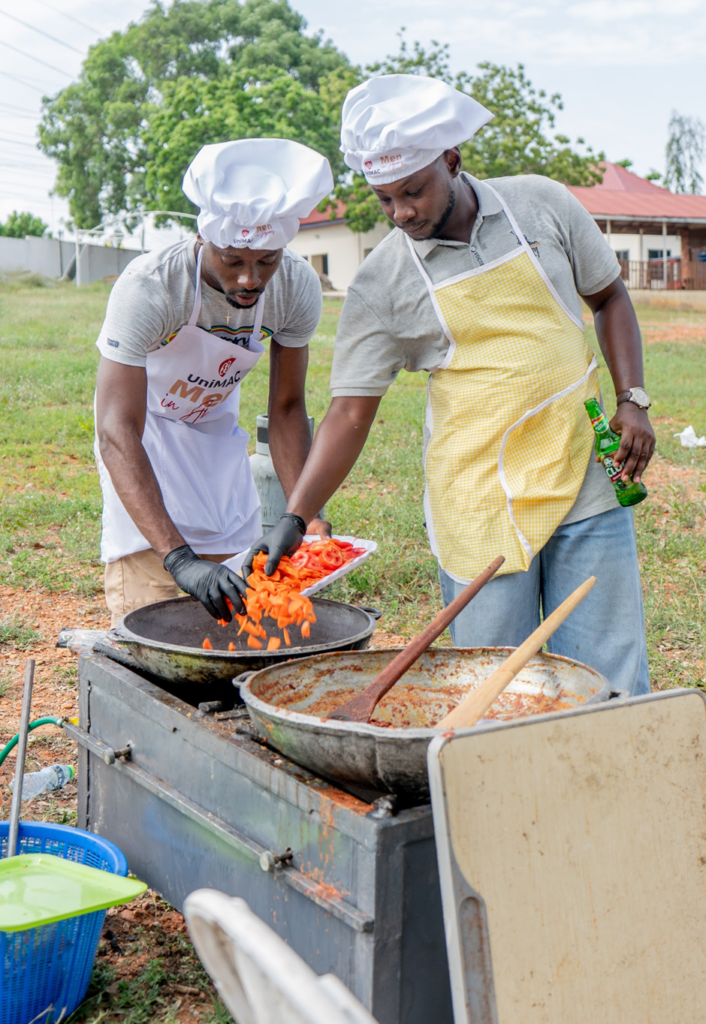
The cooking stations became scenes of concentration and collaboration as participants prepared Ghanaian dishes for the celebration.
Lecturers abandoned lecture notes for ladles, senior administrators traded office wear for aprons, and men across various ranks within the university gathered not for a conference or policy discussion, but to cook for the women in UniMAC.
What emerged from the maiden edition of “UniMAC Men in Aprons,” organised by the UniMAC Chapter of the University Teachers Association of Ghana (UTAG), Ghana Association of University Administrators (GAUA) and the Graduate Students’ Association of Ghana (GRASAG) in collaboration with the UniMAC Fun Day Committee, was more than a social gathering.
It became an unexpected portrait of community within an institution where academic schedules, traffic fatigue and professional pressures often leave little room for human connection beyond classrooms and offices.
Adding to the atmosphere were colleagues and academics from the University of Education, Winneba, who joined the celebration not merely as guests, but as part of the shared fellowship, eating, laughing, and enjoying the experience alongside the UniMAC community.
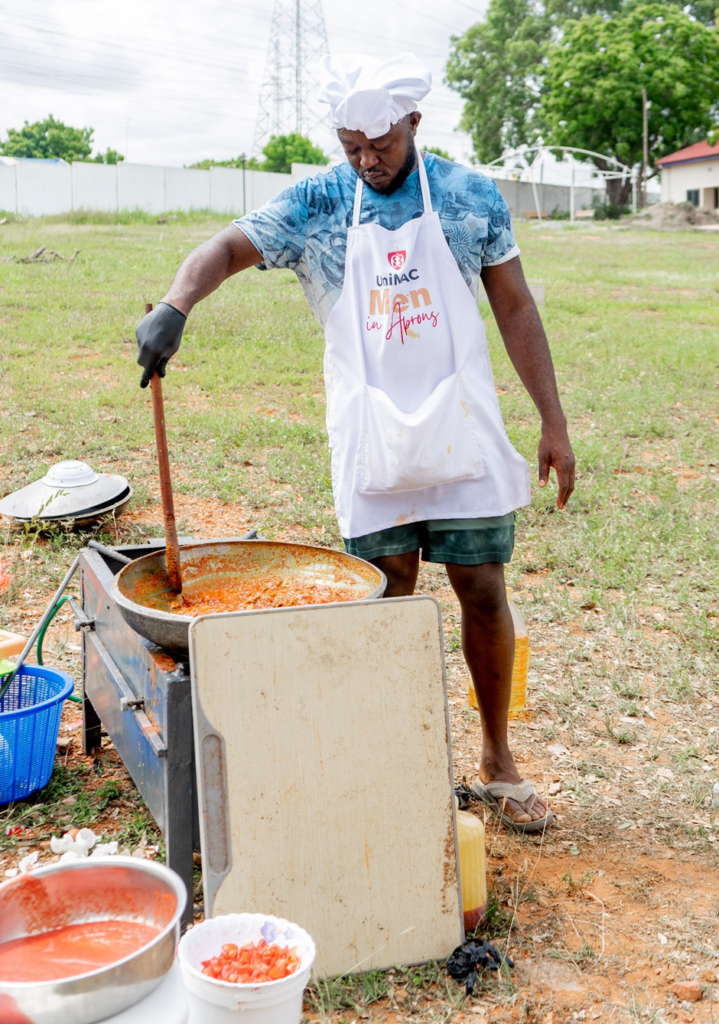
Across the venue, smoke rose steadily from cooking fires as teams of men prepared distinctly Ghanaian meals with visible determination and occasional confusion.
There was fufu with light soup, yam with kontomire stew, fried rice, jollof rice, salads, “abunuabunu” soup and banku with okro stew prepared by a group that humorously branded itself the “Oilless Group.”
The gathering sought to create a space where the UniMAC community could encounter itself in new ways.
Vice Chancellor of UniMAC, Professor Eric Opoku Mensah, in his remarks, stated that the programme was inspired by a longstanding communal tradition at the University of Education, Winneba, where academic staff and students periodically gather to socialise outside formal academic settings.
Having attended the Winneba gathering himself, he said UniMAC’s leadership felt compelled to replicate the idea in a way that reflected the institution’s own culture and realities.
For Professor Eric Opoku Mensah, the need for such gatherings extends beyond entertainment. He reflected on the structural nature of UniMAC itself, explaining that, unlike some traditional residential universities, many staff and students commute long distances daily, leaving little opportunity for informal interactions and social bonding.
“What particularly gladdens my heart is the fact that if you look at our university, by virtue of our history and our nature, we are not a university that started with residential accommodation, so there is very little opportunity for us to come together,” he said while addressing participants.
His remarks captured a reality familiar to many urban workers in Accra, where hours spent in traffic and demanding schedules can quietly reduce institutions into transactional spaces rather than communities. It is partly why he believes gatherings like “Men in Aprons” must continue beyond a single afternoon.
“We need to create more opportunities for us to come together and relax,” the Vice Chancellor noted, adding that the university hopes to institutionalise the programme annually while pursuing plans for a campus clubhouse that would encourage staff interaction beyond working hours.
Vice Chancellor Professor Eric Opoku Mensah addressing participants during the maiden UniMAC Men in Aprons gathering.
That same desire for reconnection echoed in the words of Rector of the Institute of Journalism campus, Professor Christiana Hammond, who arrived at the programme noticeably relaxed and casually dressed, fully embracing the spirit of the event. She described the gathering as an opportunity for people within the institution to temporarily step away from professional routines and rediscover one another socially.
“We are in Aprons because we want to socialise. We want to remove our feet from our shoes, stretch our legs and relax,” she said. “We want to connect and network with people whom we usually may not meet during the day or in our line of work.”
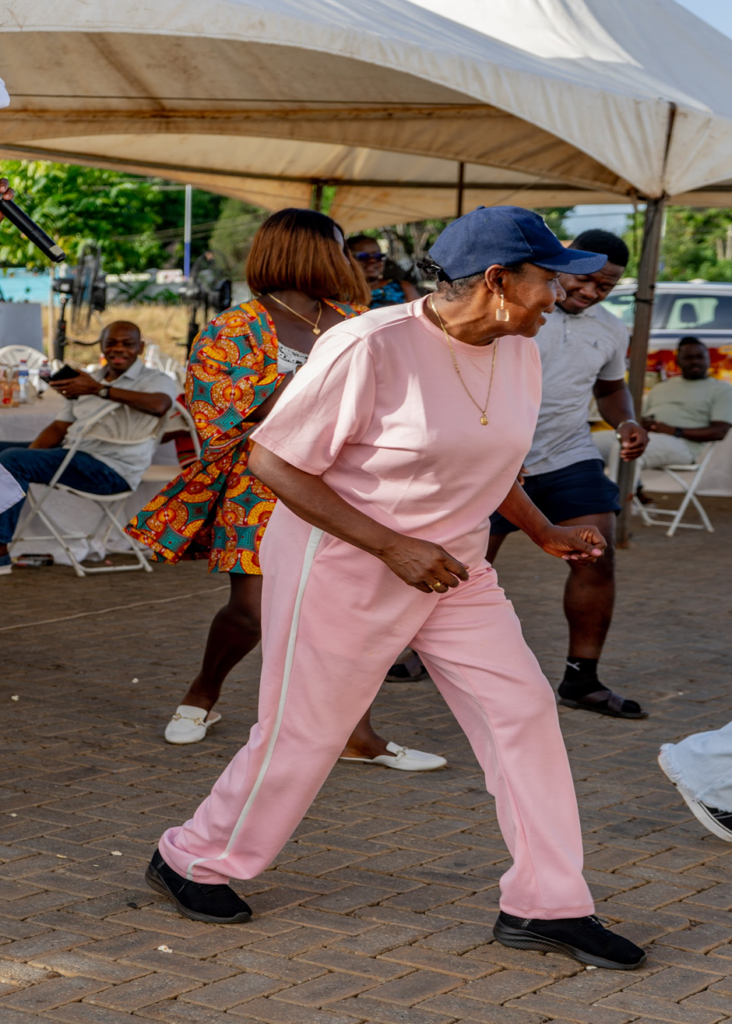
Rector of the Institute of Journalism campus, Professor Christiana Hammond, joined participants on the dance floor during the celebration.
Her comments reflected the atmosphere throughout the grounds. Conversations flowed easily between lecturers, administrators, postgraduate students and guests. Some gathered around tables playing cards and oware while others moved from one cooking station to another offering unsolicited culinary advice, laughter and commentary.
For UTAG-UniMAC President Dr Noel Nutsugah, the timing of the programme before Mother’s Day carried symbolic significance. He explained that the intention behind the event was to celebrate women within the university community by allowing men to take responsibility for preparing meals and creating an atmosphere of appreciation.
“What we have decided to do is to take time off to prepare very sumptuous meals for our mothers,” he said, noting that the celebration welcomed women from UTAG, GRASAG, GAUA and the broader university community.
UTAG UniMAC President Dr Noel Nutsugah preparing meals during the Mother’s Day-themed celebration.
As the evening deepened, the gathering gradually transformed from a cooking event into something resembling a family festival. One of the defining moments came during a spontaneous musical exchange between men and women, where each side repeatedly interrupted the other with songs in a playful contest that quickly dissolved into collective singing and dancing.
Adding to the atmosphere was celebrated Ghanaian musician Okyeame Kwame, popularly known as the Rap Doctor, who is currently pursuing a PhD at UniMAC. His presence elevated the excitement as participants sang, danced and cheered.
For many who attended, however, the true significance of the event could not be measured merely by the food served or the entertainment provided. In an era where institutional life increasingly feels hurried and impersonal, “UniMAC Men in Aprons” offered a reminder that universities are not sustained by infrastructure and academic calendars alone.
They survive through relationships, shared experiences and the deliberate creation of spaces where people can simply encounter one another as human beings.
And perhaps that was the quiet success of the afternoon. Before Mother’s Day arrived on Sunday, UniMAC’s men had already delivered something many institutions struggle to build: a genuine sense of belonging.
DISCLAIMER: The Views, Comments, Opinions, Contributions and Statements made by Readers and Contributors on this platform do not necessarily represent the views or policy of Multimedia Group Limited.
DISCLAIMER: The Views, Comments, Opinions, Contributions and Statements made by Readers and Contributors on this platform do not necessarily represent the views or policy of Multimedia Group Limited.