
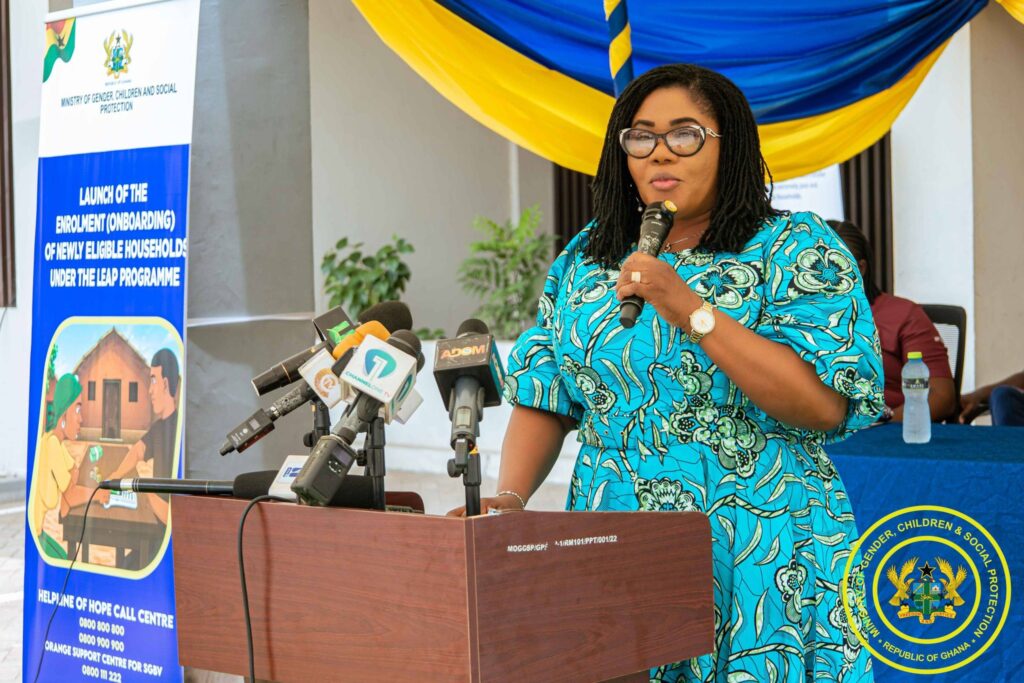
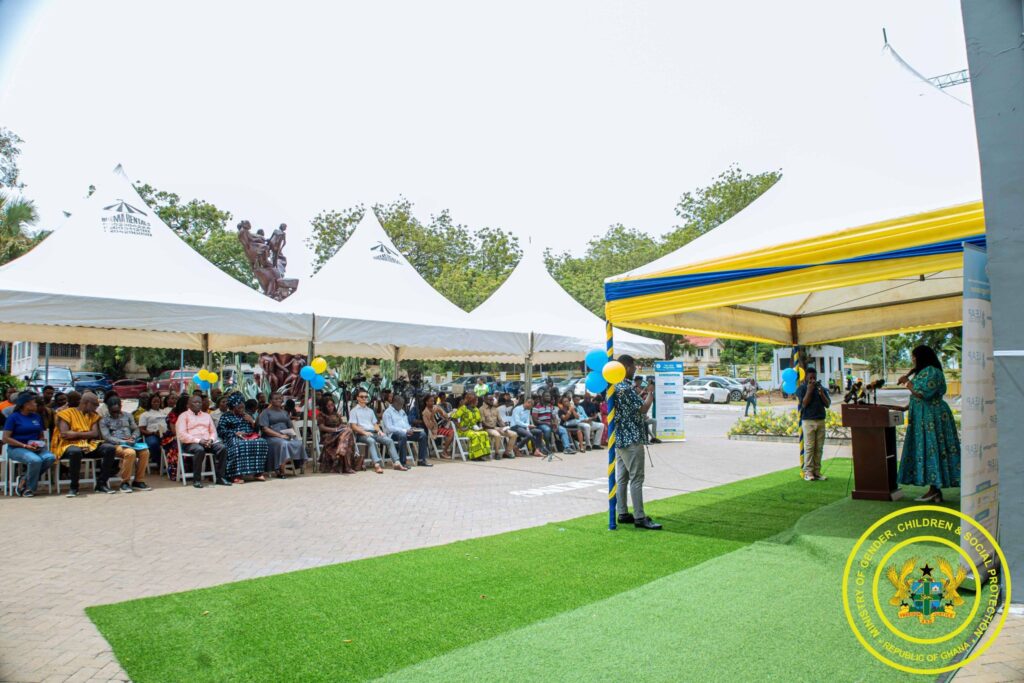

Government has officially commenced the enrolment of 400,000 newly eligible households onto the Livelihood Empowerment Against Poverty (LEAP) Programme, marking a significant expansion of the country’s social protection framework.
The initiative, led by the Ministry of Gender, Children and Social Protection, is aimed at extending support to more vulnerable populations nationwide.
Since its introduction in 2008, the LEAP Programme has grown substantially—from just 1,654 households across 21 districts to approximately 350,000 households prior to the latest reassessment.
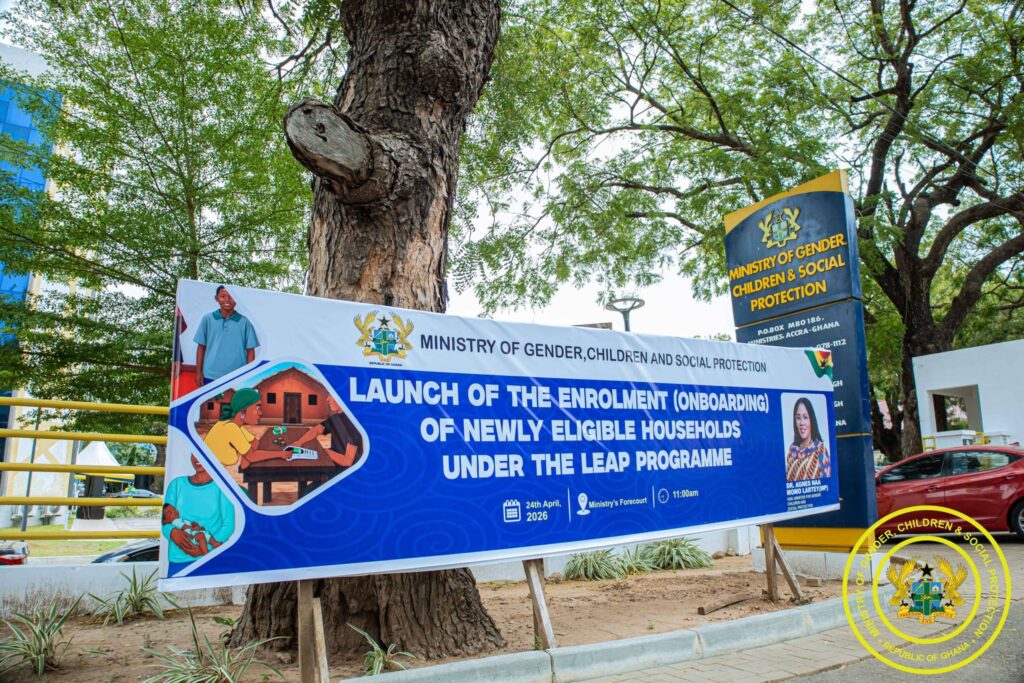
The scheme provides financial assistance to extremely poor households, including the elderly without support, persons with severe disabilities, orphans and vulnerable children, as well as pregnant women and mothers with infants.
The current onboarding follows a comprehensive nationwide reassessment conducted using the Ghana National Household Registry, designed to enhance targeting, transparency and efficiency.
Speaking at the launch, the Minister for Gender, Children and Social Protection, Dr Agnes Naa Momo Lartey, described the exercise as a “clear statement of commitment, reform and hope,” highlighting the government’s resolve to build a more responsive and credible system.
She explained that the reassessment reflects the changing nature of poverty, noting that while some households have been retained, over 220,000 others will exit the programme after meeting improvement benchmarks.
“Payments to new beneficiaries will begin only after the enrolment process is fully completed to ensure transparency and accountability,” she stated.
Dr Lartey further emphasised that the LEAP Programme continues to play a critical role in supporting access to education, healthcare and basic needs, adding that the latest expansion represents more than numbers—it signifies improved livelihoods and strengthened families.
She also outlined transition measures for exiting households, including access to livelihood support, financial literacy training and community savings schemes to promote long-term resilience.
Development partners, including the World Bank, UNICEF and the World Food Programme, commended the reforms and reaffirmed their support, while the Ministry reiterated its commitment to ensuring that no vulnerable Ghanaian is left behind.
DISCLAIMER: The Views, Comments, Opinions, Contributions and Statements made by Readers and Contributors on this platform do not necessarily represent the views or policy of Multimedia Group Limited.
DISCLAIMER: The Views, Comments, Opinions, Contributions and Statements made by Readers and Contributors on this platform do not necessarily represent the views or policy of Multimedia Group Limited.