
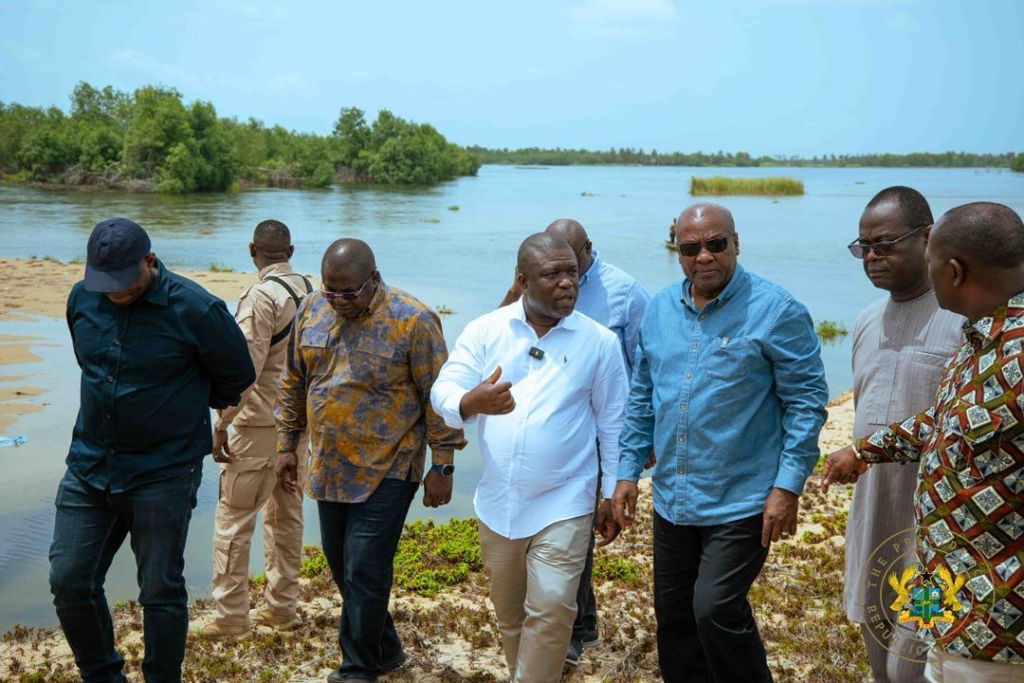
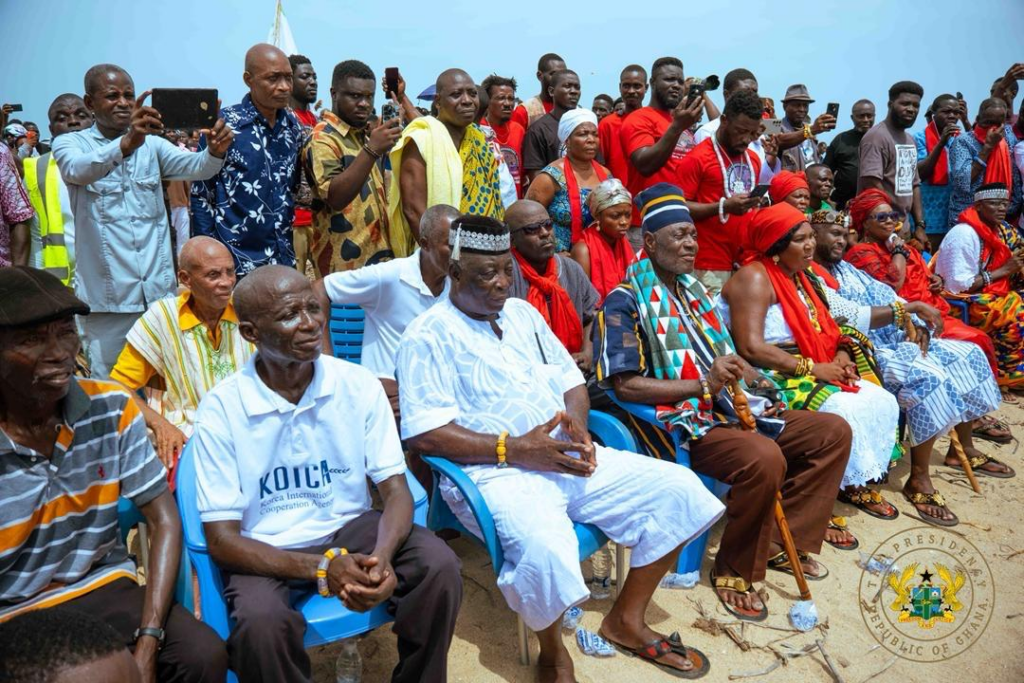
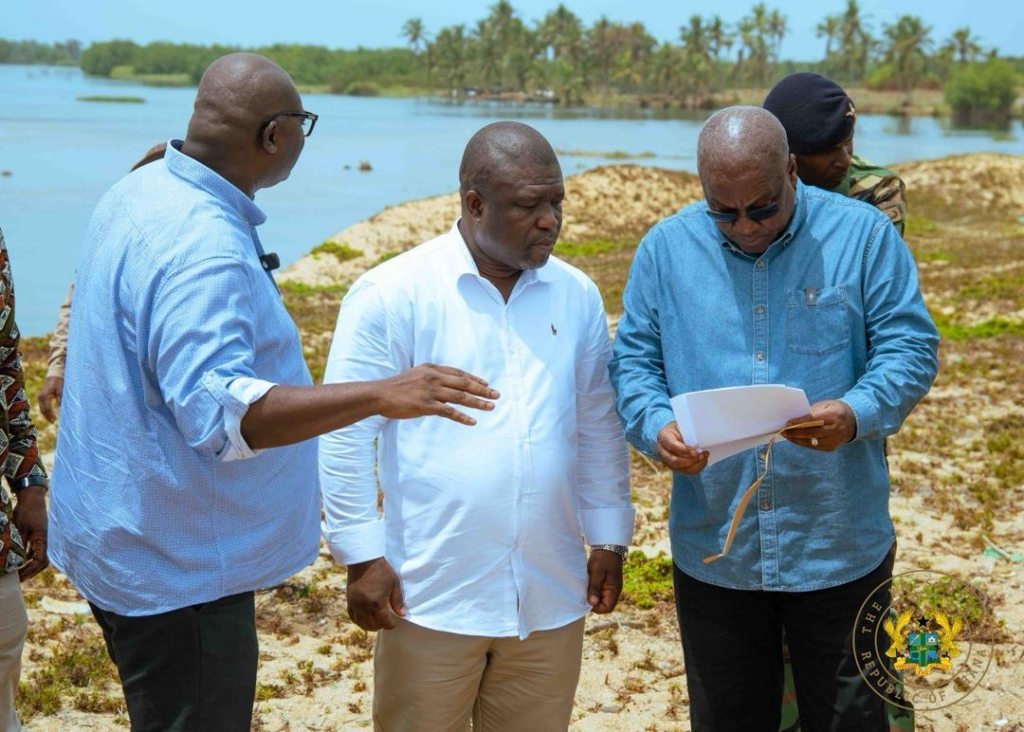
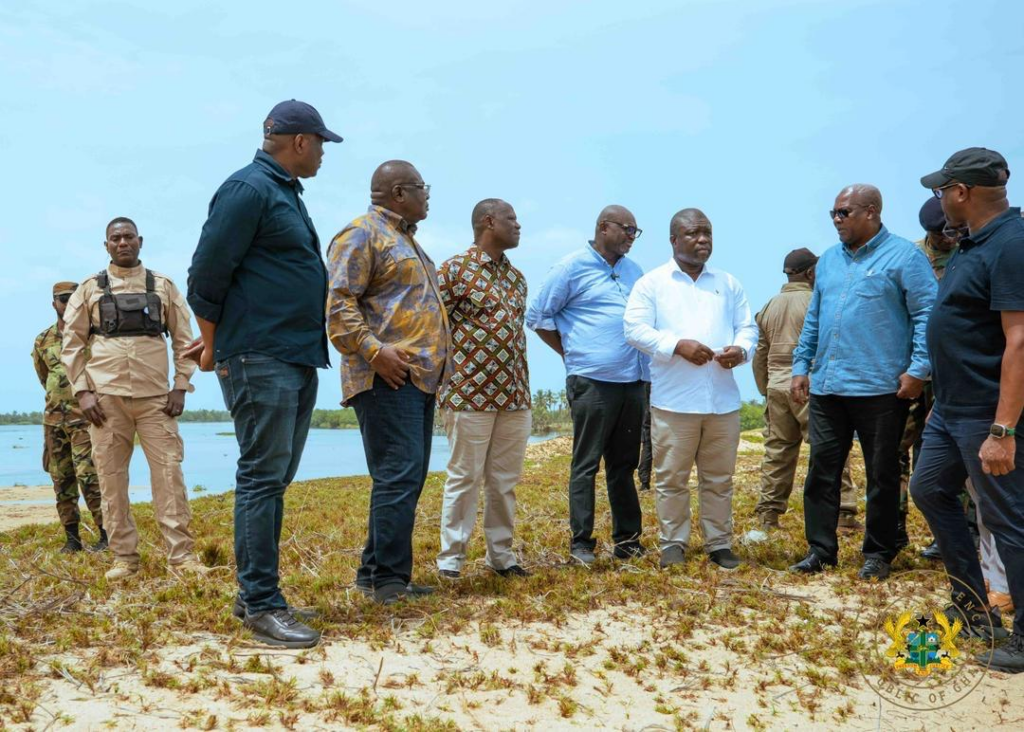
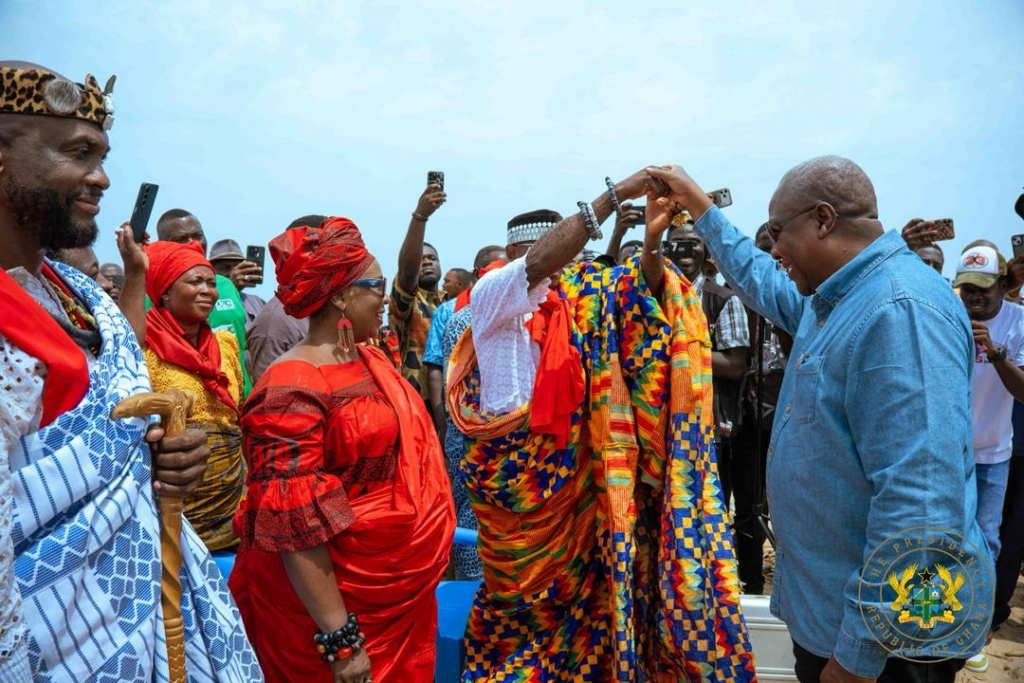
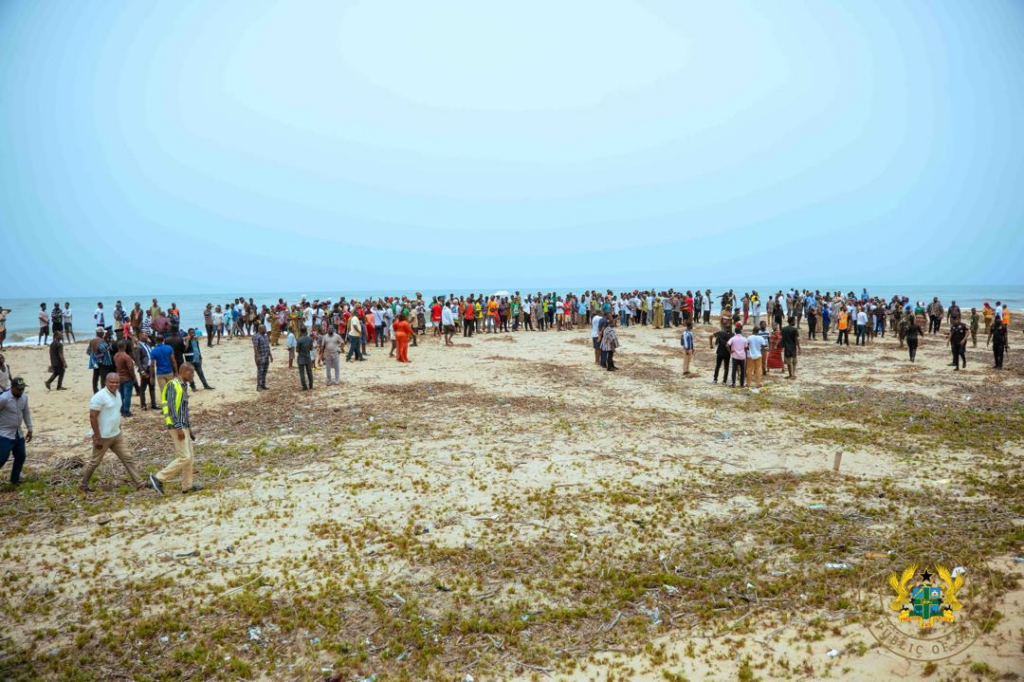
President John Dramani Mahama has reaffirmed the government’s commitment to safeguarding vulnerable coastal communities, following his visit to areas affected by recent tidal waves in Fuveme and the Blekusu Phase II sea defence project.
Speaking on Wednesday, 29th April, during an inspection tour of the affected communities, Mr Mahama said the visit was prompted by reports of the sea breaching sections of the coastline, causing concern among residents and local authorities.
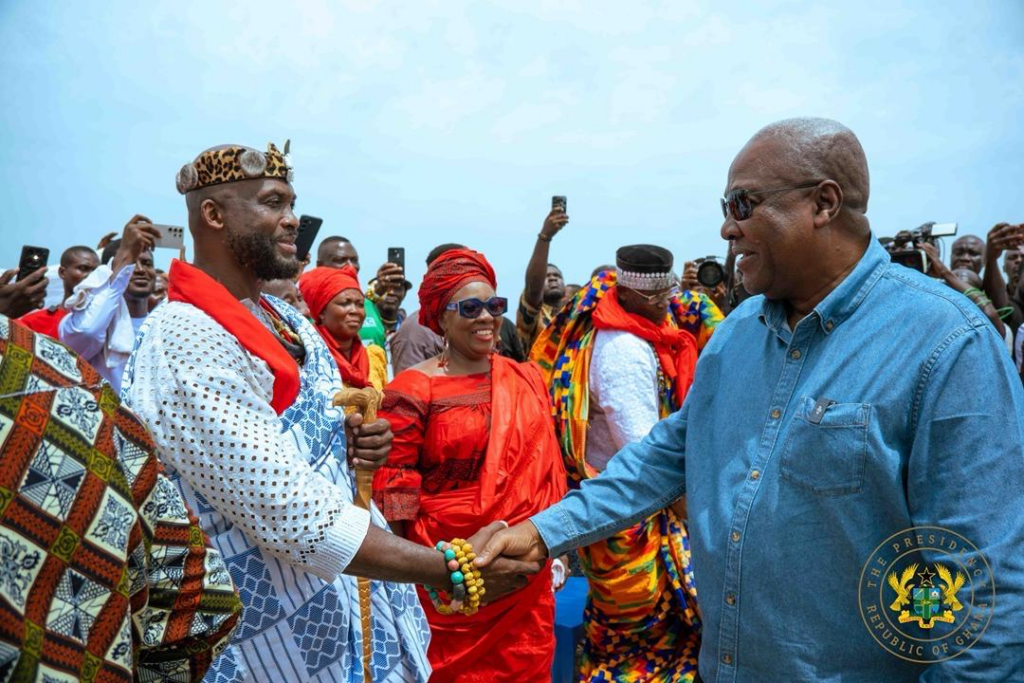
“We got information about what happened with the sea breaking through and so today, we decided to come and take a look at what is happening,” he stated.
He explained that the affected areas fall within the scope of the World Bank-supported WACA (West Africa Coastal Areas) project, a major regional initiative aimed at addressing coastal erosion and flooding.
The project, valued at approximately $150 million, is expected to cover extensive portions of Ghana’s eastern coastline, including Ketu South and parts of Anloga.
Mr Mahama highlighted a series of past and ongoing coastal defence interventions, noting that successive governments have contributed to mitigating the perennial threat posed by tidal waves.
He referenced earlier projects such as the Akplewo–Torkor sea defence undertaken during his presidency, as well as the historic Keta Sea Defence Project initiated under the administration of Jerry John Rawlings.
He further pointed to the Blekusu Phase I project already completed, with Phase II currently under construction, as part of broader efforts to shield coastal settlements from encroaching seas.
According to Mr Mahama, the WACA project will incorporate a combination of engineering and environmental measures.
These include the construction of sea defence walls and groynes—structures designed to interrupt wave action and reduce coastal erosion—as well as nature-based solutions such as planting coconut trees along beaches to stabilise the soil.
Additionally, he noted that mangrove restoration in estuarine areas would play a crucial role in buffering communities against tidal surges and limiting further encroachment by the sea.
Addressing concerns about delays, Mr Mahama acknowledged that progress on the project had stalled in 2024, largely due to the electoral cycle.
However, he assured residents that work had since resumed under the current administration.
“I am happy to announce that the feasibility studies have been finished. They are at the design stage, and after the design stage, they will do the procurement—that is the actual construction of the WACA project,” he said.
He expressed confidence that physical works would commence in the near future, bringing long-awaited relief to affected communities.
Mr Mahama also sought to allay fears regarding funding, emphasising that the allocated World Bank resources for the project remain intact.
“We tried to repurpose some of the World Bank projects, but as the minister said, we protected the $150 million that is meant for the WACA project. So your money is safe, and the project will go on,” he assured.
DISCLAIMER: The Views, Comments, Opinions, Contributions and Statements made by Readers and Contributors on this platform do not necessarily represent the views or policy of Multimedia Group Limited.
DISCLAIMER: The Views, Comments, Opinions, Contributions and Statements made by Readers and Contributors on this platform do not necessarily represent the views or policy of Multimedia Group Limited.